Pranayama vs. Wim Hof, Box Breathing & 4-7-8: What's the Real Difference?
Read Time: 5 Mins
Breathing is the one thing you do 20,000 times a day without thinking about it — until someone tells you you've been doing it wrong.
Open any wellness app right now and you'll quickly come across techniques like Wim Hof method, Box breathing, and the 4-7-8 breathing exercise. But what we’ve been seeing lately is people comparing these techniques with pranayama.
Navy SEALs swear by box breathing. Biohackers rave about the Wim Hof Method. Sleep-deprived professionals are counting to seven. Holding for four. And Indian yogis? Well, they have been guiding students through pranayama for over 3,000 years. Long before the word "breathwork" existed in any Western language.
So which breathing method is better? What actually separates ancient pranayama from these modern techniques? Are they genuinely different or is today's breathwork largely Indian science repackaged with a new brand and, too often, without attribution?
The answer, it turns out, is both. Understanding the distinction matters not just for your health, but for giving credit where it is long overdue. In this blog, Ekattva Yogshala will tell you about the differences between pranayama vs Wim Hof, box breathing, and 4-7-8. Before we move into details in the following sections let us have a birds eye view of all these techniques and how they compare to each other:
The Ultimate Breathwork Comparison Table
| Comparison Feature | Pranayama | Wim Hof Method | Box Breathing | 4-7-8 Technique |
|---|---|---|---|---|
| Origin / Creator | Ancient Indian Yogis (3,000+ years old; part of the Eight Limbs of Yoga) | Wim Hof (Dutch athlete/extreme adventurer), developed through personal experimentation | Traditional roots (Sama Vritti) but popularized by former Navy SEAL Mark Divine | Dr. Andrew Weil, based on holistic and wellness principles |
| Primary Mechanism | A vast system of varied techniques (energizing, calming, balancing, heating, cooling) | Controlled hyperventilation followed by prolonged breath retention (hypoxia) | Rhythmic, equal-ratio breathing (4s inhale, 4s hold, 4s exhale, 4s hold) | Pattern-based breathing (4s inhale, 7s hold, 8s exhale) |
| Core Philosophy | Spiritual & Holistic: Regulating prana (life force) to bridge the body, mind, and consciousness | Physiological: Biohacking the nervous system, boosting immunity, and building cold resilience | Functional & Performance: Stripped of philosophy to focus entirely on immediate stress regulation | Physiological & Calming: Focused directly on sleep induction and nervous system resetting |
| Primary Benefit | Lifelong self-knowledge, mental clarity, spiritual growth, and systemic balance | Adrenaline release, immune system stimulation, and high physical endurance | Immediate clear-headed calm, sharp focus, and tactical composure | Deep relaxation, anxiety relief, and a natural sedative effect for sleep |
| Best Practical Use Case | When you want the breath to be a mindful, lifelong daily practice rather than just a quick fix | In the morning for energy, immune support, or before cold exposure | Before a difficult conversation, presentation, or high-stress tactical moment | As part of a bedtime wind-down ritual to help you fall asleep quickly |
| Safety / Contraindications | Requires strict care; traditional texts note distinct restrictions based on season, health, or pregnancy | High risk of fainting; never practice near water, while driving, or without a safe environment | Highly accessible and generally safe, with low risk of hyperventilation | Mild CO2 pressure from the 7-second hold; generally safe but may cause lightheadedness initially |
What Pranayama Actually is (and isn't)?
Pranayama is derived from the Sanskrit word - pranayama. It signifies life force, breath and to extend and to restrain. It is often translated as breath control. But that does not come close to capturing the essence of the practice. Pranayama is a science of breath, consciousness, and vitality that is as systemically documented as any science in the world. It stems from India's Vedic traditions and was then developed using thousands of years of yogic inquiry.
The principles mentioned in the scriptures are actually thousands of years old. For example, Hatha Yoga Pradipika, Shiva Samhita and Patanjali's Yoga Sutra.
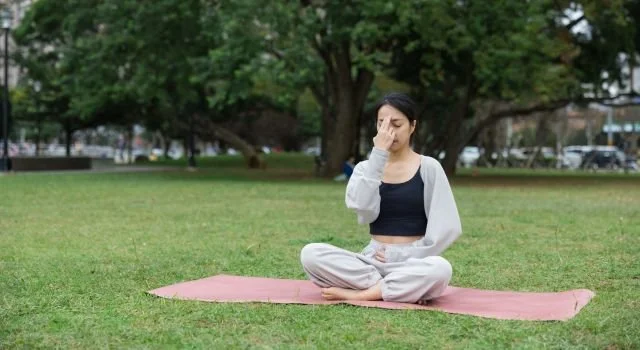
There are dozens of unique pranayama exercises like Nadi Shodhana (alternate nostril breathing) to balance the nervous system, Kapalabhati (skull-shining breath) to energize and cleanse, Bhramari (humming bee breath) to calm the mind, Ujjayi (victorious breath) to generate internal heat, Bhastrika (bellows breath) to stoke vitality and more.
Each practice is connected to a certain physiological and energetic effect. Classical texts tell us which practices are appropriate for which constitutions, seasons and life situations.
Pranayama was never meant to be practised alone! It is one of the eight limbs of yoga. Patanjali's yoga sutras list it as the fourth. Sitting after ethical codes and physical postures and before deeper practice of sensory withdrawal and meditation.
The breath was a bridge. Not an end but a gateway to inner stillness.
What is the Wim Hof Method?
We hope you’ve already guessed who’s next in the Pranayama vs Wim Hof, box breathing, and 4-7-8 techniques comparison. Wim Hof was a Dutch athlete who climbed Everest wearing shorts and has more than 20 cold endurance records. He developed his method through personal experimentation after the death of his wife. And then worked with researchers to research the effects of his method.
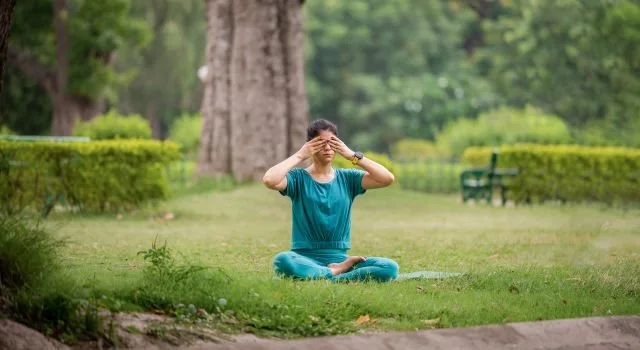
The core breathing cycle involves 30–40 deep, rapid inhalations followed by a passive exhale, then a breath hold on empty lungs (typically 1–2 minutes), followed by a recovery breath held briefly. This is repeated for three to four rounds.
What's happening physiologically is dramatic. The rapid breathing causes hypocapnia - a sharp drop in carbon dioxide. This temporarily alkalises the blood and triggers light-headedness. It can induce tingling or even euphoria. You must be thinking if subsequent breath hold might feel suffocating? , paradoxically, not really. That’s because CO₂ (not oxygen) is the main driver of the urge to breathe.
Studies have shown the method can reduce:
Inflammatory markers
Influence the autonomic nervous system
Modulate immune responses.
In pranayama terms, Wim Hof most closely resembles Bhastrika (bellows breath) combined with extended kumbhaka (breath retention). Techniques that Indian yogis have practised and documented for over a thousand years.
India's classical texts actually warn against overusing such practices without qualified guidance, precisely because the physiological effects are so powerful. Wim Hof deserves credit for bringing breathwork into the mainstream and inviting scientific scrutiny. But the underlying mechanics were not invented in the Netherlands — they were adapted, whether consciously or intuitively, from a tradition that had already mapped this territory in remarkable depth.
What is Box Breathing?
Box breathing is the third contender of Pranayama vs Wim Hof, Box Breathing and 4-7-8 technique comparison table. Four counts in, four counts hold, four counts out, four counts hold - that’s exactly what it is about. Box Breathing was popularised by former Navy SEAL commander Mark Divine. It has been widely adopted across military and emergency services training.
It’s a simple yet genius idea. Feeling stressed and struggling to remember other breathing techniques. Well, you won’t be struggling with this one because its symmetrical pattern is easy to remember. Yes, even under stress! By extending the breath and introducing deliberate pauses, box breathing activates the parasympathetic nervous system. You can lower cortisol and bring heart rate variability into a more coherent rhythm.
In pranayama, this maps closely to Sama Vritti (equal ratio breath) with kumbhaka (retention) added — a practice described in Indian yogic texts as a foundational, balancing technique suitable for almost everyone, at almost any time. It is what an Indian yoga teacher would offer a beginner before introducing any more advanced practices. If you’re just starting on your breathwork journey, it also helps you understand diaphragmatic breathing since proper belly breathing forms a rock-solid foundation for a plethora of pranayama techniques.
Box breathing's popularisation in military and corporate settings is genuinely valuable — but it is worth naming plainly: the structural logic was already present in India's breath science. What changed was the branding.
The difference is context and framing. Pranayama embeds Sama Vritti within a broader philosophical understanding of what breath is doing in the body. Box breathing strips it to its essential mechanism and points it directly at performance and stress regulation. Neither is wrong. They're just operating at different layers. And trust us, that broader layer is difficult to appreciate just by reading alone. It becomes much clearer when you practise alongside others under proper guidance. The calendar has already crossed the halfway mark. And the New Year? It has a funny way of arriving faster than we all expect. There’s no better time to experience the power of sangha with the New Year Yoga retreat. During the program, practices like Sama Vritti are understood not just as breathing exercises. But as part of the complete yogic tradition! Looking for a more immersive spiritual experience? Then Ekattva’s New Year Mantra Sadhna retreat offers another opportunity to explore how breath, mantra, and meditation naturally complement each other.
What is 4-7-8 Breathing?
At last, we have the 4-7-8 breathing vs pranayama, box breathing, and Wim Hof methods. It’s a popular technique promoted by Dr Andrew Weil et al. It asks you to count to 4 while inhaling. Then you have to count to 7 while holding your breath. At last, count to 8 while exhaling. Weil calls it a natural tranquilliser for the nervous system. Many users say that it can help them fall asleep in just minutes.
Most of the work is being done on the long exhale. Exhalations stimulate the vagus nerve and bring about a shift of the autonomic nervous system towards parasympathetic dominance - rest, digest, recover. The 7-count hold generates a slight CO2 pressure which further improves the calming effect.
This is a similar ratio to the classical pranayama ratios used for cooling and calming practice, which are ~1:2:2 (inhale:hold:exhale). The ratios and kumbhaka of both Chandra Bhedana (moon-piercing breath) and Bhramari have long been prescribed specifically in the Indian yogic tradition for use prior to sleep; for reducing anxiety; for being breath-oriented towards exhale.
What are the Actual Differences Between Pranayama vs. Wim Hof, Box, and 4-7-8 Breathing?
Let's be clear about something the wellness industry rarely says aloud: modern breathwork has not so much discovered these techniques as it has rediscovered — and in many cases rebranded — what India's yogic tradition had already codified in extraordinary detail. The mapping is not approximate. It is precise. Bhastrika is the Wim Hof breath. Sama Vritti is box breathing. Exhale-dominant kumbhaka is the 4-7-8 method. The physiological mechanisms being celebrated in clinical studies today are the same ones India's rishis and yogis described using the language of prana, nadis, and kosha — a different vocabulary for the same underlying reality.
This isn't about dismissing modern research — science's ability to measure and validate these practices is genuinely valuable. But there is a difference between building on a tradition and quietly erasing its origins. Much of what is currently sold as cutting-edge breathwork in apps, books, and wellness retreats is applied pranayama with the Indian source footnoted out. Naming this honestly is not polemical — it is accurate.
But the differences are real and worth naming.
Scope: Pranayama is a system, not a single tool. It contains techniques for every state — energising, calming, balancing, heating, cooling — and a framework for knowing which to use when. Modern methods tend to be optimised for a single outcome: performance, sleep, immune stimulation.
Philosophy: Pranayama didn't just have anything to do with the lungs. It is integrated into a worldview that perceives breath as the place where body, mind, and consciousness converge. The purpose was not to relieve stress. It was to be free from them. The larger frame adds depth to the practice. Something you won't get when you're counting boxes.
Contraindications and care: The classical texts on pranayama are very careful about who can practise what and when. Certain methods are unsuitable if you are pregnant, sick, in a particular season or for specific body types. Modern breathwork is often lacking this subtlety. Wim Hof breathing should not be done when near water, or when operating a car, and has been found to induce shallow water blackouts. One of the gifts of pranayama, which is underutilised, is the wisdom of caution.
Integration: Pranayama is done after asana (posture) and before meditation in classical yoga. It's something in between, not a hack of its own. When taken out of that context, pulling box breathing out of it, you get a useful tool. There is a stronger possibility, though, that the breath can be a practice of self-knowledge that is not a nervous system reset.
So Which Technique Wins?
All of them, potentially, for different moments. You can:
Reach for Wim Hof when you want a powerful reset, to build cold tolerance, or to explore the outer edges of what your nervous system can do. Approach it with respect and never practise it alone until you're experienced.
Use box breathing before a difficult conversation, a presentation, or any moment that calls for clear-headed calm. It's reliable, portable, and asks nothing of you philosophically.
Try 4-7-8 as part of a wind-down ritual — perhaps after putting your phone away, in the dark, lying down. A few rounds in and you may be asleep before you finish counting.
And if you find yourself wanting more — wanting the breath to be not just a tool but a practice — that's when pranayama opens its doors. Find a teacher. Start with Nadi Shodhana. Sit with it long enough to discover that breath isn't something you do. It's something you are.
Pranayama Vs Wim Hof, Box, and 4-7-8 Breathing: End Note
There, you now know the differences between pranayama, the Wim Hof method, box breathing, and 4-7-8 breathing. As you saw above, there isn’t a single winner. In many ways, they are all valuable. The real choice depends on your goals.
If you want to truly understand and experience these techniques firsthand, consider joining Ekattva Yogshala’s online pranayama and breathwork courses from Rishikesh. Our experienced teachers will help you practice safely, correctly, and with purpose.
Remember, breathing isn’t just something we do; it’s something we can learn to master.
We would be glad to answer any queries related to breathwork practices, write to us at info@spiritualpunditz.com.
We are also loved for our Rishikesh Mantra Sadhna programs. Experience Rishikesh at its best in our upcoming 7 Day Mantra Yoga Retreat and 9 Day Mantra Meditation Retreat.
Ekattva Yogshala® is a Yoga school that operates from Rishikesh, India. Our curriculum and training programs are rooted in the Himalayan tradition of breath science and classical yoga. Our online pranayama suite runs live from Rishikesh — not pre-recorded — with small groups and real-time correction from teachers with decades of lineage-trained experience. Courses are structured as a deliberate ladder from foundation mechanics to advanced energy mastery, starting at $99. Learn more at ekattvayogshala.com.