If Real Yoga Begins at Breath, Where Does Mantra Sadhna Belong?
Reading Time: 7 minutes
A Question That Arrived After the Last Piece
After I wrote about why real yoga begins at breath - about Pranayama sitting at the centre of classical path and not somewhere on its edges - someone wrote back to me with a question I haven’t quite put down since.
"If real yoga begins at breath, where does mantra sadhana fit?"
A really beautiful question. A sincere one. But before I answer it, I want to sit with something buried inside it. An assumption I don’t think the person asking even noticed they were making. The question feels like it’s asking me to pick a winner - breath or mantra:which comes first? As if these two are standing in a line somewhere. Waiting for me to tell them who goes ahead.
That’s not how tradition holds them. Not in my experience of it anyway.
Breath and mantra were never rivals… They were competing for the same seat. Instead, they are more like depths in the same water - you don’t reach second without having actually been in the first. Not past through. Been in. So, before I tell you where mantra sadhna belongs, I want to say something about what belonging even means inside this architecture. The one Patanjali laid out for us centuries ago. And that means we go back to him once more!
The Architecture of Inner Depth
In the Yoga Sutras, Patanjali doesn’t hand us a checklist. He gives us a progression. One that moves quietly and without rushing - from the outer toward the inner. From what’s gross toward what’s subtle. From how we behave on the surface toward what’s actually happening in consciousness underneath it.
The first four limbs (Yama, Niyama, Asana, Pranayama) belong to what he calls Bahiranga Sadhana - outer practice. And I want to be clear about what “outer” means here. Practitioners usually misread it as less important. It isn’t. It simply means these are the limbs that work with what can be seen, shaped, and steadied. How we conduct ourselves, how we sit, how we breathe. They prepare the ground.
The final four limbs (Pratyahara, Dharana, Dhyana, Samadhi) form what he calls Antaranga Sadhana - inner practice. Here, the instruments of awareness turn fully inward. The senses withdraw. Attention concentrates. Absorption deepens. And consciousness, no longer scattered across the surface of experience, begins to encounter its own nature.
This is the map. And mantra sadhana lives - with full classical authority - in the heart of the inner practice. Most precisely, it belongs to Dharana a.k.a 6th limb. It is usually translated as concentration or single-pointed focus. I’ve actually written a full blog on what mantra sadhana is in case you want to sit with that on its own before we go further here. It might make rest of this easier to follow.
But here is what I want you to sit with: mantra does not appear suddenly in Dharana like a new subject introduced in a later chapter. It is seeded much earlier. It begins — quietly, almost invisibly — in the breath.
How Breath Already Carries Mantra
Here’s something I was taught in Gurukul at Parmartha Niketan Ashram that took me years, honestly speaking, to actually receive. Not just understand but receive - breath itself is already a mantra.
Yes, every single breath you’ve ever taken, in every moment of your life? It has carried a sound. The inhalation — So. The exhalation — Ham. Together: So'Ham — one of the most ancient and revered mantras in the Sanskrit tradition. Translated, it means simply: I am That. The identification of the individual self with universal consciousness, encoded in the most involuntary act of human life.
The Vigyana Bhairava Tantra (one of the most radiant texts to come out of Shaiva tradition) speaks to this directly. It names breath-mantra as Ajapa Japa. Meaning, a mantra that repeats itself without anyone actually repeating it. A prayer already being prayed. A sound that doesn’t come from the mouth at all but from simple, ongoing fact of being alive. It is said that a human being completes approximately 21,600 breath cycles in a day. And each one is, by the tradition's understanding, a silent recitation of So'Ham.
This is not a metaphor offered to make practice sound poetic. It is a technical understanding of what breath actually is in the classical framework — not just the movement of air, but the movement of prana, and not just prana, but the subtle vibration of primordial sound that underlies all manifest existence.
When I first encountered this teaching inside the Ashram, something settled in me. The separation between pranayama and mantra — which had seemed like a clear pedagogical boundary — softened. I began to understand that consciously practicing breath was already, in its deepest sense, a form of mantra sadhana. The two were not separate rooms. They were the same room, entered at different depths.
What Changes When Pranayama Matures
Here’s how progression actually unfolds! As pranayama deepens - as breath genuinely steadies and mind genuinely quiets - something starts to happen on its own. You don’t force it. You just notice awareness is no longer scattered in 6 directions at once. There’s a gathering. A kind of inner coherence that your breath, silently, has been building this whole time.
It is at precisely this point that mantra sadhana becomes not just possible but necessary. Necessary in the sense that the mind — now somewhat quieted by pranayama, now somewhat freed from its compulsive outward movement — needs a new, subtler object to inhabit. Without one, it will simply return to its old habits. The momentum of distraction is strong. This is actually the same territory I explored when I wrote about breathwork and yoga for burnout. It will teach you why breath can reach a kind of exhaustion that asanas alone can’t quite touch.
What classical yoga offers, at this threshold, is mantra: a sound, a vibration, an object of concentration that is subtler than physical breath and yet more anchored than open awareness.
The Mandukya Upanishad places AUM - the original sound, the very root of everything else - at very base of consciousness itself. It speaks of 4 states: waking, dreaming, deep sleep, and fourth, also called Turiya - witnessing awareness that sits beneath and moves through all 3. AUM, it says, is the sound of that whole thing (all 4 states at once). So to chant or recite it inwardly with real understanding is to move your attention from the surface of experience back toward its source.
Shankaracharya, writing his commentary on Mandukya, makes the logic plain: mantra was never an accessory to yoga practice. It is its natural interior. Once the gross body has been steadied by asana, and the vital body attended to by pranayama, the mantra works on what the breath cannot fully reach — the mind-body, the Manomaya Kosha, the layer of thought and emotional patterning that sits beneath the breath but above deep consciousness.
This is the classical placement of mantra sadhana: not before breath, not instead of breath, but beyond breath — the next layer of subtlety the sincere practitioner is invited to enter.
The Five Koshas and the Logic of Subtlety
The Taittiriya Upanishad offers a map that I have returned to many times in my years of teaching: the Pancha Kosha model — the five sheaths or layers of the human being, from gross to subtle.
The outermost is Annamaya Kosha — the food body, the physical form. Asana works here.
The next is Pranamaya Kosha — the energy body, the breath body. Pranayama works here. I’ve written more on why Pranyama sits among eight limbs of yoga. If you want that laid out step by step, it’s worth understanding on its own before we layer mantra on top of it.
Then comes Manomaya Kosha — the mental body, the layer of thoughts, memories, impressions, and emotional patterns. This is where most of us actually live. not in the body. Not even in the breath, if we’re honest. We live in ceaseless, restless activity of the thinking mind. And this is exactly the layer mantra sadhana is built to work with.
At its most basic, mantra is sound. But not just any sound; one that carries a very particular vibrational quality. When received from a qualified teacher within a living tradition — as I received mine within the Gurukul — a mantra is not simply a word to repeat. It is a key. Its repetition, internal or voiced, creates a vibration that gradually reorganises the patterns of the mental body, dissolving the habitual grooves — what the Yoga Sutras call samskaras — that keep the mind in its familiar loops of reactivity.
Beneath the mental body lies Vijnanamaya Kosha — this is the sheath of higher intellect, discernment, and witnessing awareness. This is subtler than ordinary thought; it's the layer of buddhi, the faculty that can observe the mind's fluctuations rather than simply being carried by them. As mantra begins to settle the restlessness of Manomaya Kosha, glimpses of this discerning awareness start to surface — a quiet capacity to watch a thought arise without being pulled into it.
The subtlest layer is Anandamaya Kosha — the sheath of bliss, our deepest layer before pure consciousness itself. This is not bliss in the ordinary emotional sense, but the innate fullness that is said to underlie all experience, usually obscured by the activity of the other four koshas. Sustained mantra practice, by quieting the layers above it, is said to allow moments of this natural ease to be felt directly — not manufactured, but uncovered.
This is why the sequence matters. You cannot effectively work on the mental body while the physical and pranic bodies are still agitated. Asana steadies the gross form. Pranayama stills the vital energy. And from that relative stillness, mantra can enter the mental body and begin its quieter, deeper work.
What Dharana Actually Feels Like
Patanjali defines Dharana — the sixth limb, where mantra most fully lives — as "Desh bandha chittasya dharana": the binding of consciousness to a single point or place. The mind, which in its untrained state moves ceaselessly from object to object, is invited — gently, repeatedly, without violence — to rest upon one thing.
A mantra is among the most powerful objects that classical yoga offers for this purpose. And the reason is specific: unlike a visual object or a physical sensation, mantra is sound — and sound is vibration, and vibration is prana in its subtlest perceptible form. To rest your attention on mantra is to rest it at the meeting point (where mind meets energy, thought meets breath, personal meets something far bigger than the impersonal).
In my own practice and in what I watched unfold over my years living and studying at Parmartha Niketan Ashram, I noticed something - Dharana through mantra doesn’t feel like concentration in the way we normally mean that word. Effortful, gripping, a kind of mental clenching - no, it’s none of these. It feels, at its best, like a kind of magnetic settling. The mind does not hold the mantra so much as the mantra begins to hold the mind — drawing scattered attention toward a single point of coherence, the way a tuning fork draws discordant strings into resonance.
When Dharana deepens — when the gap between the one who is concentrating and the object of concentration begins to narrow — it flows, without any decision or doing on the practitioner's part, into Dhyana: meditation. Not the technique we loosely call meditation in modern usage, but its classical definition — an unbroken stream of awareness toward the object. And from Dhyana - when whatever separation remained finally dissolves - Samadhi arises. Absorption. Union. The state every single limb of this path has quietly been preparing you for.
Practised within this understanding, Mantra sadhana isn’t some devotional extra you tack on. It’s not a cultural sitting on top of REAL yoga. It is the architecture of the interior path.
A Word About Receiving Mantra
I want to say something here that is not always said in contemporary discussions of mantra practice, because I think it matters.
In the classical tradition, mantra is not chosen from a list or selected from an app. It is received from a teacher who has themselves received it, within a living lineage of transmission. The word for this is Diksha: initiation. The mantra is alive for more than one reason. Yes, its vibrational quality matters. But it also carries something else - accumulated awareness of everyone who has practised it sincerely before you, going back further than any of us can trace.
At Parmartha Niketan Ashram, I came to understand Diksha not as a ceremony people perform but as a relationship. Between student and teacher. Between one person and whole tradition. Between a particular sound and consciousness that sound exists to reveal. When I received the mantra in that setting, it didn’t feel like being handed information. It felt like being handed a thread - and being shown, for the first time, that other end of it was already tied to something inside me.
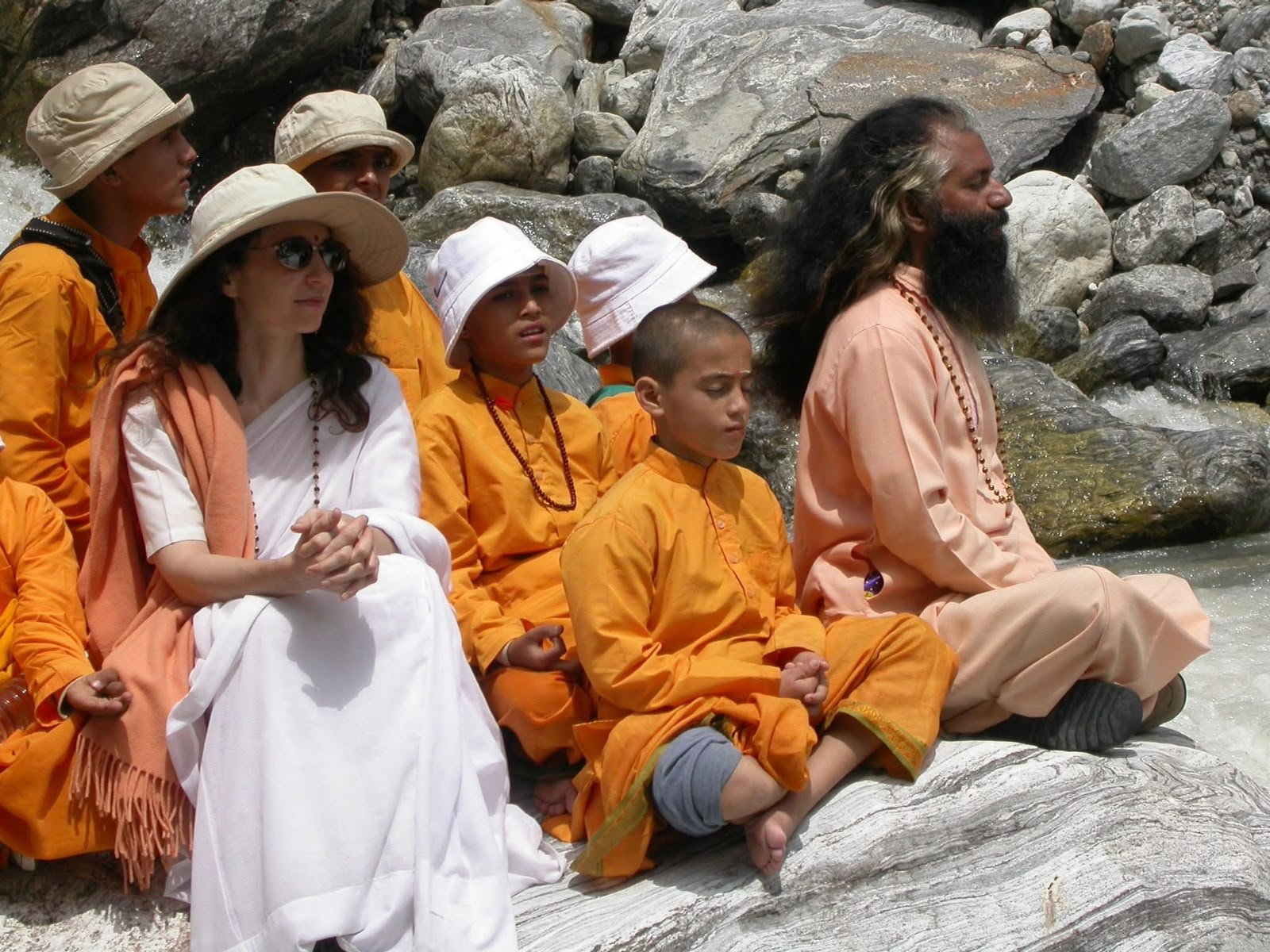
Picture: The teachings of Gurukul are not taught, they are lived
I say this not to make mantra sadhana sound out of reach. I say it to honor what it actually is. In a time when mantras are sold as wellness products and marketed by syllable count, the classical understanding is worth protecting: a mantra received with genuine intention, within a real relationship of teaching, carries something that a self-selected mantra simply cannot.
This is not elitism. It is an understanding of how transmission works — and it is one of the things the Gurukul tradition preserves with the greatest care.
The Sequence, Held Whole
So, to answer the question that began this piece.
Mantra sadhana belongs in the interior of the classical yoga progression. It follows breath the way the subtle follows the gross - not as a replacement, but as a deepening. Asana steadies the body. Pranayama steadies the energy and introduces, already, the seed of mantra through So'Ham, the breath's own sound. Pratyahara withdraws attention from the surface of the senses. And then, in the relative quiet that these preceding practices create, mantra becomes the instrument through which Dharana (concentration) does its work on the mental body: the layer that breath can calm but not fully transform.
This isn’t a ladder where you abandon each rung once you’ve climbed past it. It’s closer to a series of rooms - each one opening further into the same house. You don’t leave the breath behind when you take up mantra. You bring it with you - it was always already there anyway, carrying the sound whole time, whether you noticed it or not.
What changes is how closely you’re listening to it!
And maybe that’s the simplest way I put the whole thing: pranayama teaches you to regulate the breath. Mantra sadhana teaches you to finally hear what breath has been saying all along.
The practice deepens. The layers reveal themselves, one by one, in their own time. And the tradition - patient, precise, unrushed - walks beside you the whole way.If you’d rather not walk it alone, I teach pranayama breathwork courses where we work through exactly this. Pranayama as ground and mantra as what grows out of it. No rush, no shortcuts. Just the same sequence Gurukul gave me… Passed on the way it was passed to me!
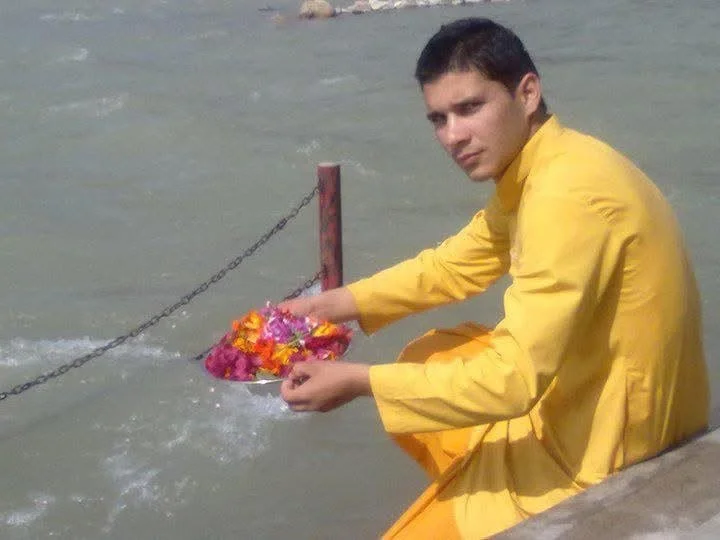
Picture: Wherever we go from our alma matter Parmartha Niketan, our relationship with Ganga keeps us homebound
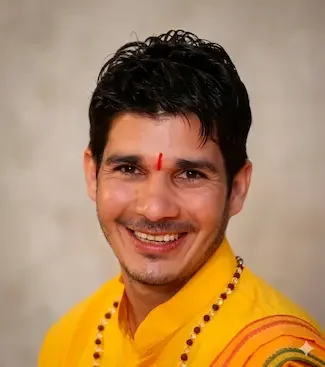
Namaste! I am Manohar, a yoga teacher and student of the classical tradition, shaped by years of residential study and practice within the Gurukul at Parmartha Niketan Ashram in Rishikesh, India. Everything I understand about yoga — asana, pranayama, mantra, the inner science of consciousness — was taught to me within a living lineage, not assembled from books alone. I write and teach with the hope of passing that living thread on.This reflection is part of a series in which I contemplate my experience with the classical foundations of yoga — what the tradition actually teaches, and how we might find our way back to its depth. Read part 1 of the series Why real yoga begins at breath, what my years in Parmarth Gurukul taught me.
If this piece has opened a question or a longing in you, I warmly invite you to reach out. The tradition is patient. And it begins — always — with exactly where you are.