
Best Time to Visit Rishikesh for a Yoga and Mantra Retreat
Reading Time: 9 minutes
Someone asked me once when the right time to visit Rishikesh actually is. And I gave them the answer you’ll find in half of the travel blogs out there - “October to March, cool and dry”. Not wrong exactly. Just useless in the way that answers sometimes are - it tells you nothing about what it actually feels like sitting on the ghats at 5:30 in the morning with mala in hand. Breath fogging in front of you, waiting for the sun to finally clear the ridgeline.
Here's the truth of it:
Rishikesh doesn't have a bad time to visit. It has different times. Each one hands you something different. Some months hand you silence - real silence; the kind that’s hard to find anywhere anymore. Others hand you crowds, chanting, and a kind of communal electricity you genuinely can’t manufacture any other way. Which one is “best” depends entirely on what you're going there to do. And if yoga and mantra practice is the reason, the calendar matters more than most travel guides tell you.
So here’s the practical, honest breakdown from Ekattva Yogshala, an ashram that's been in Rishikesh long enough to know it firsthand. This is what actually happens on the ground, not generic weather averages pulled from a spreadsheet somewhere.
𓂃🖊 Quick answer: Late October through early March is the strongest window for sustained yoga and mantra practice. Go in December or January if you want depth, quiet, cold-morning austerity. Go late February through mid-March if you want community and celebration, timed around the International Yoga Festival. Outside that window, April through June brings heat and pilgrimage energy, and monsoon (July through September) trades comfort for near-total solitude.
Rishikesh, season by season
| Season | Months | Daytime Temp | Crowds | Best For |
|---|---|---|---|---|
|
Post-monsoon
|
Oct–Nov | Low-to-mid 20s°C | Moderate | Outdoor asana, vivid scenery, evening satsangs |
|
Winter
|
Dec–Jan | Near freezing (mornings) | Low | Depth, austerity, undistracted mantra work |
|
Festival season
|
Feb–mid Mar | Mild, warming | High (peaks at festival) | Community, kirtan, the International Yoga Festival |
|
Pre-summer
|
Apr–Jun | Up to 35°C+ | Moderate | Chardham Yatra energy, cold Ganga, early-morning practice |
|
Monsoon
|
Jul–Sep | Warm, humid | Very low | Solitude, one-on-one teacher time, deep quiet |
Why Timing Matters More Than Almost Anywhere Else
Rishikesh sits where Ganga leaves the Himalayan foothills and enters the plains. That’s the geography doing most of the work here. The river runs cold and swift year-round. Honestly, that part never changes. But town around it? It shifts dramatically with the seasons. Monsoon swells the river to a roar. Winter wraps the whole valley in mist. Summer pushes the heat up into territory that makes long meditation sit genuinely uncomfortable. No matter how disciplined you are.
For a mantra retreat, temperature and noise levels aren't small details you can plan around later. Japa and pranayama ask for stillness - physical stillness, sure but also a kind of environmental stillness underneath it. It's the same layered relationship between breath and mind bridge we've gone into elsewhere - how one genuinely can't settle without the other doing its part first.
A body fighting 40°C heat isn’t a body that settles easily into repetition and breath. Neither is a body shivering through a poorly heated ashram room at 5 am. So while Rishikesh is technically open to visitors all year - nothing shuts the doors. A window that actually supports deep practice is narrower than that.
October to March: The Practice Season
This is the stretch almost every serious teacher will point you toward, and for good reason.
October and November arrive right after the monsoon clears, and the valley is at its most vivid. The Ganga runs full and turquoise. The hills go properly green. The air has that scrubbed, just-rained quality you only get for a few weeks a year. Daytime temperatures sit comfortably in the low-to-mid 20s C, dropping to a pleasant coolness once the sun goes down. This is a strong window for outdoor asana practice and evening satsangs by the river, right before the real winter chill moves in.
December and January bring the coldest weather Rishikesh sees all year - morning temperatures dropping close to freezing. Fog sitting low over water until well into mid-morning. Sounds harsh on paper. But this is exactly when a lot of long-term practitioners say Rishikesh feels most like itself. Tourist crowds thin right out. Ashrams settle into their quieter winter rhythm.
And there's something about chanting mantras in the cold, wrapped in a shawl. When hands are barely warm enough to hold a mala. That strips away the performative side of practice entirely. This is close to the same stripped-down quality our founder writes about experiencing during his own years training inside a Rishikesh ashram. The time when he learned about why real yoga begins at breath - long before winter mornings here had an audience at all
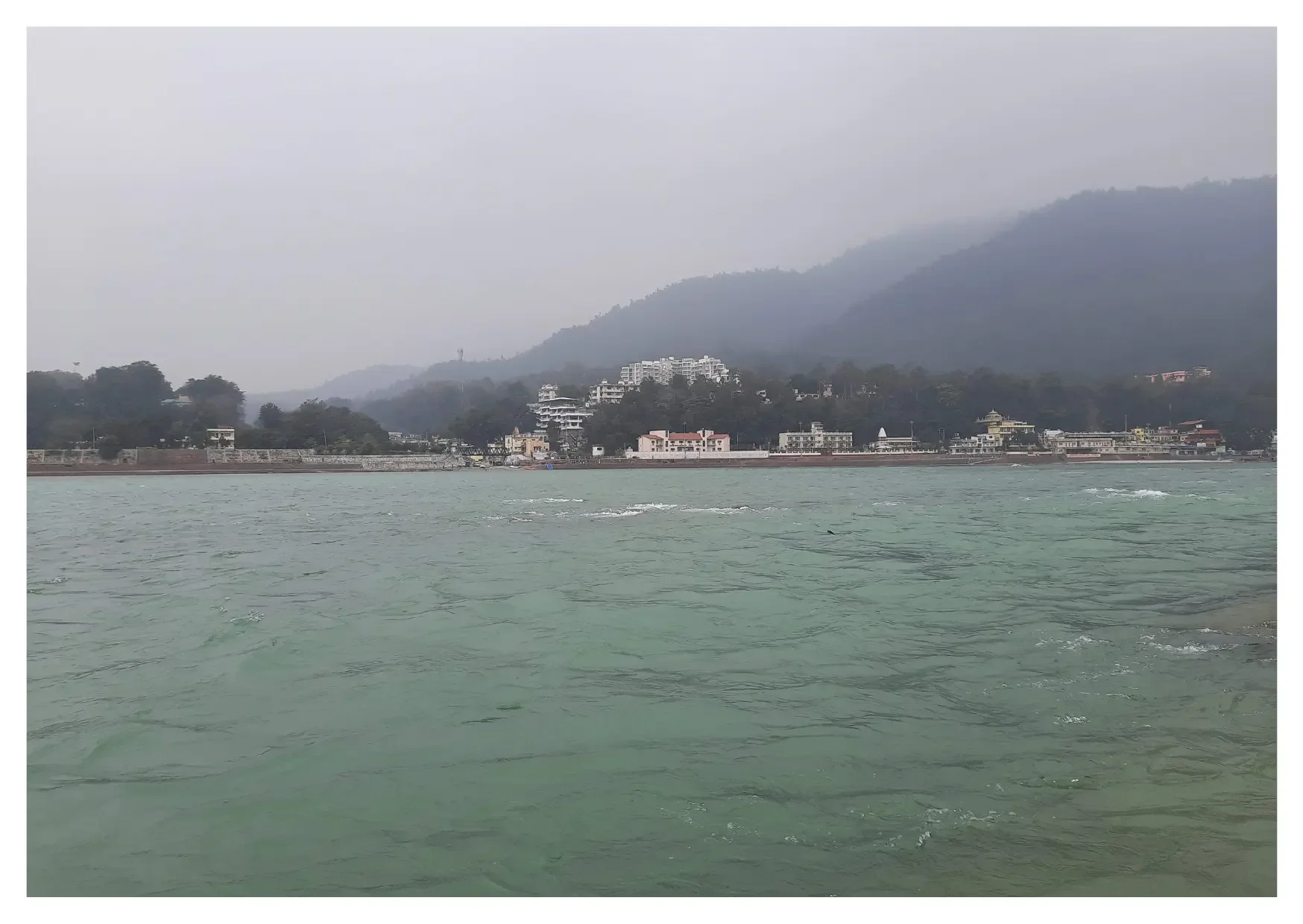
Pictured: A view from the Parmartha Niketan Ashram ghats. Fog blankets the valley and icy waters compete with piercing air as the city moves under its coldest during December - January.
Want a mantra retreat that feels closer to austerity than vacation? This is your season. One warning, however. It catches people every single year: pack real winter layers. Rishikesh's Himalayan proximity means winter nights are genuinely cold. Not just cool in the way that word usually means back home.
February and early March is arguably the sweet spot for most travellers. The cold had broken by then. Crowds haven't peaked yet. And the town is already gearing up for its biggest spiritual event of the year.
The International Yoga Festival
Want Rishikesh at its most alive? Plan around the International Yoga Festival at Parmarth Niketan Ashram (usually held in the first half of March). It's a week-long gathering - teachers, musicians, and practitioners from dozens of countries, all pulled into one riverside campus for daily asana sessions, kirtan, satsang, and an evening Ganga Aarti on a scale you simply won't see the rest of the year.
Worth being honest about what this means for a mantra retreat specifically, though: festival is joyful. Communal. It is not quiet. If your goal is introspective, solitary mantra work, festival week can feel more like a spiritual festival than a retreat - which, to be fair, it literally is. Some people love that energy and find it deepens their practice through shared devotion - that feeling of hundreds of voices chanting the same sound at once. Others find it distracting. They prefer to arrive the week after instead. At that time, the town was still buzzing but the schedule had finally cleared.
Know which version of yourself you're bringing before you book.
What the Ganga Aarti Feels Like, Festival or Not
Most people picture the Ganga Aarti as its festival version. Packed steps, hundreds of lamps, a wall of sound you can feel in your chest. That's real. Totally worth seeing at least once in your life! But here's what a lot of people don't realize - aarti happens every single evening of the year at Triveni Ghat and at Parmarth Niketan (festival or not). Everyday version is a completely different experience.
Outside festival season (especially through the winter months), you'll often find a few dozen people instead of a few hundred. Priests moving through the ritual unhurried. They don’t perform for a crowd. Diyas drifting out into a dark, quiet river. Chanting close enough to feel rather than just hear from somewhere in the back.
Community and spectacle are what you're after? Time your trip to the festival then. Want the aarti to feel like a private moment instead of a performance? An ordinary December evening will give you exactly that!
April to June: The Heat Builds
By April, Rishikesh starts warming up fast. And by May and June, afternoons can climb past 35°C without much warning. This isn't the season most people picture when they think of the town. Honestly, it's not for everyone. But it has its defenders. Mornings are still cool enough for a 6 am practice. Ganga is fed by snowmelt so it stays cold and clear even as the air around it turns to an oven. And this is also when the Chardham Yatra pilgrimage season opens. Filling the roads north of town with pilgrims heading toward Yamunotri, Gangotri, Kedarnath, and Badrinath.
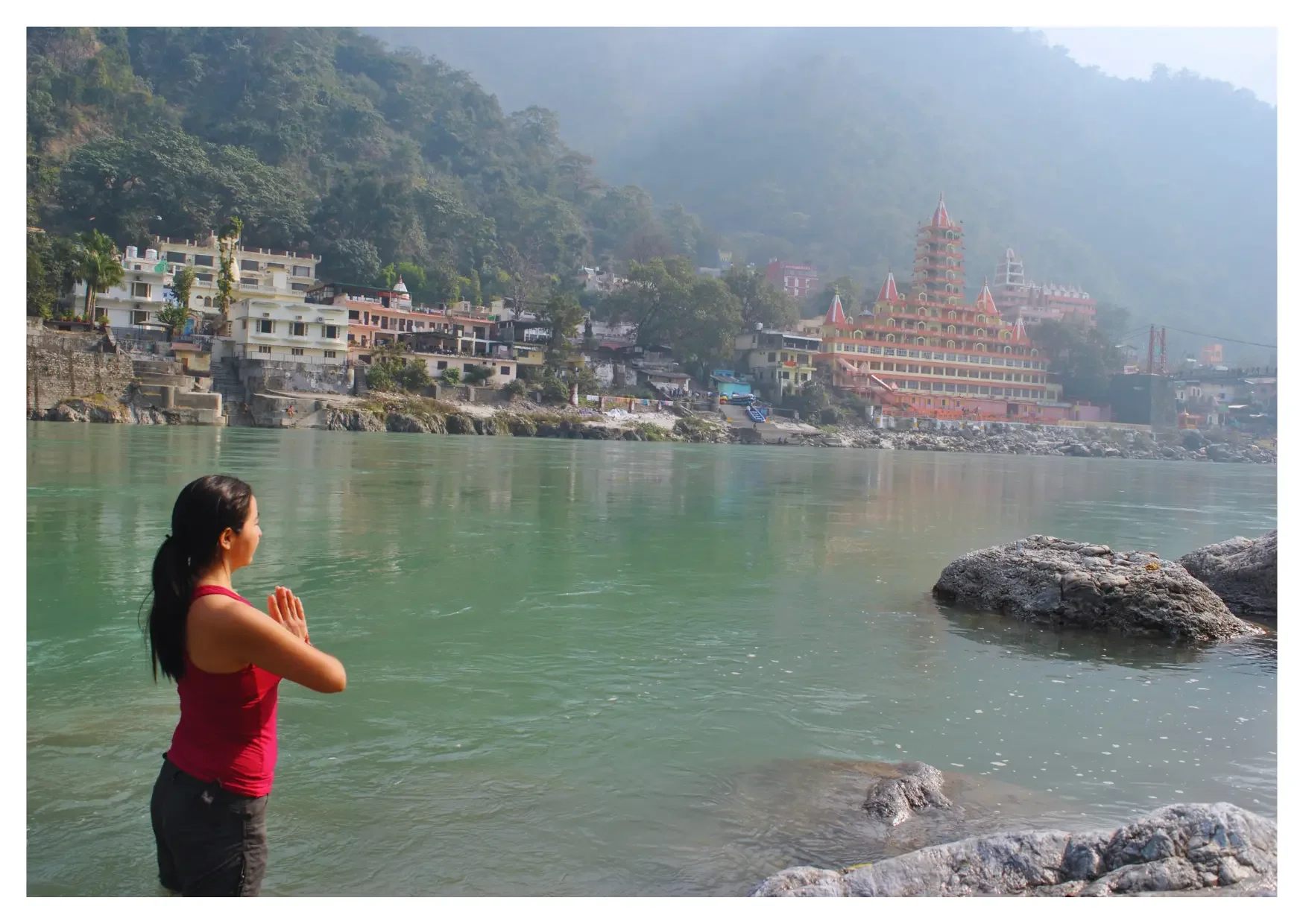
Pictured: Trayambakeshwar Temple next to Ram Jhoola. Summers sees a burst of energy in Rishikesh - this is the season of the annual pilgrimage ‘the chardham yatra’ and also the onset of summer vacations.
If you're drawn to that pilgrim energy or want to combine a retreat with a Chardham journey, this window makes sense despite the heat. If heat genuinely disrupts your practice though, this isn't your season. Afternoons become a write-off and most retreat schedules shift everything into early morning and late evening to compensate.
July to September: Monsoon
I'll be direct about this one: monsoon is the season to think carefully about, not automatically avoid.
Rishikesh's monsoon runs roughly July through early September, and it doesn't ease in gently. Heavy rain, sometimes stretching for days at a time. A Ganga that swells and quickens well past its usual pace. Occasional landslides on the mountain roads leading further north, the kind that can close a route for a day or two without much notice. River-adjacent activities like rafting typically shut down entirely for the season, and some of the smaller ashrams scale back their programming or close altogether for maintenance while the town waits the rain out.
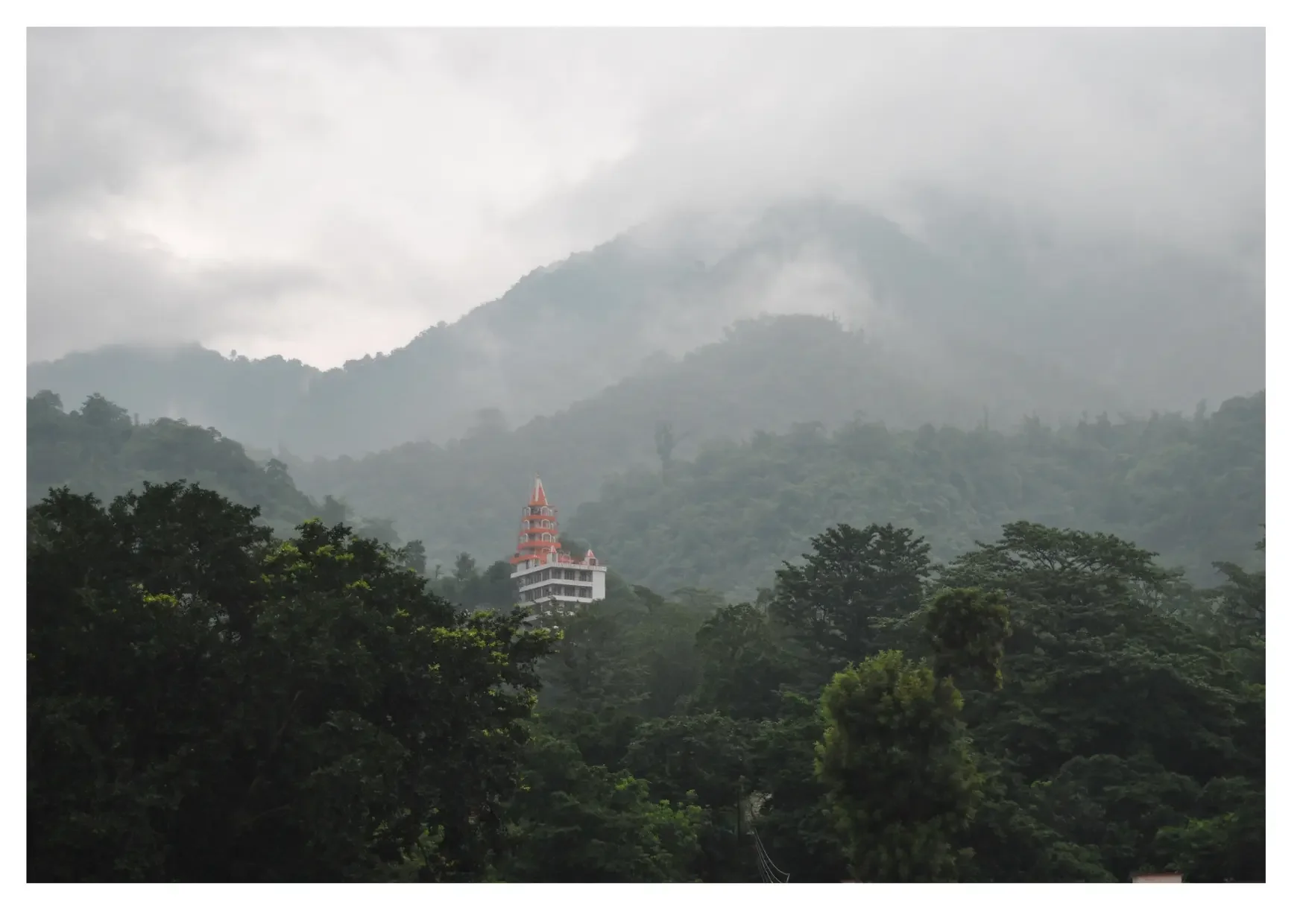
Pictured: Bhootnath Temple as seen from Swargashram. Monsoon is when the river is at its mightiest and the mountains are at their liveliest.
But there's a case for monsoon too, and it's not a small one. The valley turns a deep, saturated green you don't see any other time of year. The town empties out almost completely, so if what you want is genuine solitude — an ashram room to yourself, a nearly empty meditation hall, teachers with time to actually sit with you one-on-one — this is when it happens. Several long-time visitors I've spoken with specifically choose July or August for exactly this reason: fewer people, deeper attention, rain on the roof during evening chanting. It's the same kind of quiet a lot of people arrive here chasing without quite naming it. We've written before about yoga for burnout, telling why breath reaches that particular exhaustion in a way almost nothing else does.
It asks more of you logistically (check road conditions if you're travelling beyond Rishikesh itself, and expect some days where outdoor practice simply isn't possible), but it rewards patience.
Matching the Season to the Kind of Retreat You Actually Want
Having spent over a decade here now, when someone asks me now what is the best time to visit Rishikesh, I say you work backward from intention rather than forward from a generic "best months" list. No one is experienced or knowledgeable enough to answer this for your soul, except for a few indicators that may help.
𖤓
If you want the full, communal experience — big kirtans, a packed Ganga Aarti, a real sense of a global yoga community gathered in one place — aim for late February through mid-March, ideally around the International Yoga Festival.
𖤓
If you want depth over breadth, and prefer austerity to celebration — go in December or January. Cold mornings, thin crowds, and a stripped-down version of the town that makes mantra repetition feel less like an activity and more like a discipline.
𖤓
If you want warmth, longer daylight, and don't mind afternoon heat — April through early June works, especially if you're pairing your retreat with time in the mountains beyond Rishikesh.
𖤓
If solitude matters more than comfort — monsoon, July through September, gives you an almost private version of the town, with the tradeoff of unpredictable weather and reduced infrastructure.
𖤓
If you're building your trip around the shoulder seasons for value and balance — October, November, and late September hit a genuinely good middle ground: decent weather, moderate crowds, full ashram programming, and prices that haven't yet climbed to peak-season levels.
𖤓
And if this is your first time making this trip alone, timing is only half the decision; we've written separately about what actually makes a first women’s solo travel retreat here work.
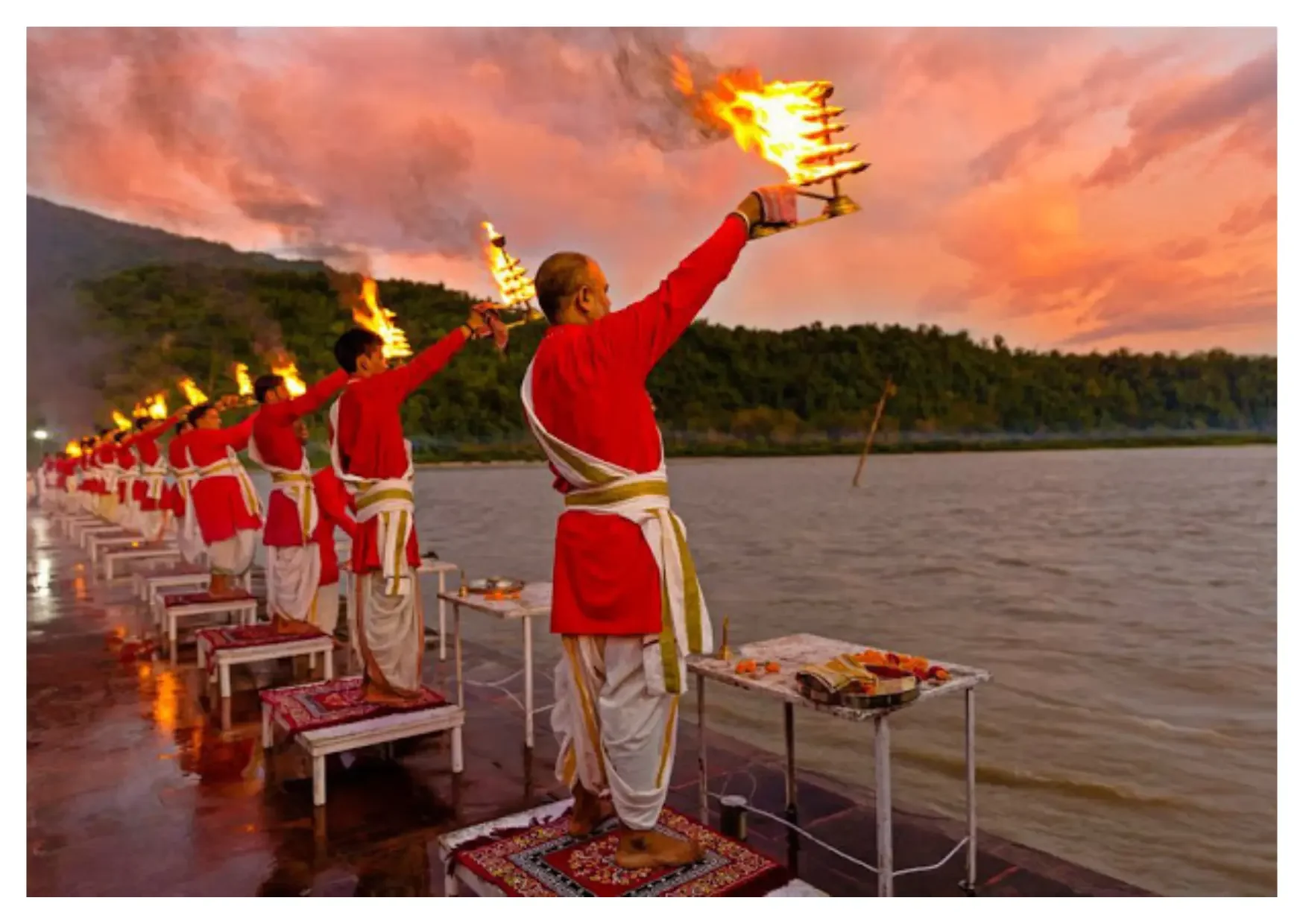
Pictured: Ganga Aarti at Triveni Ghat. Rishikesh has something for everyone, you just need to know what you seek.
A Few Practical Notes Before You Book
A handful of things I wish someone had told me plainly before my own first trip:
Ashram accommodation books up early for the winter season and especially for festival weeks — if you're set on a specific place like Parmarth Niketan or one of the well-known Sivananda-lineage ashrams, reach out two to three months ahead for December through March dates.
Rishikesh sits at a modest elevation, around 370 meters, so it's not high-altitude in the way Himalayan trekking routes are — but the temperature swing between day and night, especially in winter, is bigger than most people expect from a "warm country" mental model of India.
Retreat pricing tends to track the crowds. Winter and festival-season retreats generally cost more than monsoon or summer programs, sometimes by a meaningful margin, which is worth factoring in if budget shapes your decision as much as weather does.
And one more thing, gently: there's no season that guarantees a transformative experience. I've sat through a freezing January satsang that felt like nothing, and a sweaty, chaotic June session that cracked something open I hadn't expected. The calendar sets the conditions. What you do inside those conditions is still up to you.
The Honest Bottom Line
If you want one answer: late October through early March is when Rishikesh best supports sustained yoga and mantra practice, with December and January for depth and quiet, and week of the International Yoga Festival for community and celebration. Outside that window, April through June and monsoon months each offer something real, just not the same thing - heat and pilgrimage energy in one case, rain and solitude in the other.
Pick the version of Rishikesh that matches the practice you're actually trying to build, not the one that photographs best. These days, when someone asks me when to go, I still don't give them a single month — I ask them what they're looking for first. The river will be there either way, and it doesn't keep a calendar.
↟𖠰˚☀︎ᨒ↟𖠰
Knowing when to go is only half the planning. The other half is knowing what you're actually going there to do — whether that's the specific, layered healing this town works through caves, ashrams, and Ayurveda (why Rishikesh heals the way it does), or the deeper pull of the river and mountains that's kept seekers coming for three thousand years (why visit Rishikesh, of all places).
If you're planning this as a first solo trip, the season you pick also shapes the safety conversation — festival crowds and winter quiet each come with a different version of that question, answered honestly here in the blog - is Rishikesh safe for solo women. And whichever window you land in, the day-to-day texture of actually being there — the community, the meals, the small logistics no seasons chart can capture — is its own subject, one we get into in Why Rishikesh Stays With You.
If what you're looking for is a shorter, focused reset — the kind that fits into a real vacation window without asking you to restructure your whole year, our 7 Days Vedic Mantra & Yoga Retreat is built for exactly that. And if you're someone drawn more to what December and January actually offer here — cold, quiet, practice that goes deep rather than wide, our 21 Days Vedic Mantra Sadhana Course is the version of Rishikesh this article keeps circling back to.
Hari Om!
If you've visited Rishikesh, what month did you go and what surprised you most about that season? Write to us if you are planning a trip and want real accounts, not just the guidebook version.