Why Rishikesh Heals!
Reading Time: 6 minutes
The Caves, the Ashrams, and the Quiet Work of Coming Back to Yourself
This is its method. Because "spiritual epicenter" is a nice phrase, but it doesn't explain why someone arrives exhausted, hollowed out, half-convinced nothing will help — and leaves two weeks later sleeping properly for the first time in a year. That's not the river's doing alone. That's caves, ashrams, Ayurveda, and a very old, very specific understanding of how a human being actually heals.
Caves That Taught Silence Before Silence Was a Practice
Above the town, tucked into the hillsides along the Ganga, are caves that have been used for meditation for longer than most religions have existed. Vashishta Gufa (also Guha in Sanskrit) is the one most people find first — a cool, dark chamber where the silence has a texture to it, thick enough that you notice your own heartbeat within a few minutes of sitting down. Legend places the sage Vashishta here in deep meditation; today it still functions exactly as it did then, as a space built for one purpose only.
There's nothing to photograph in a meditation cave that does it justice. That's rather the point. A cave strips away every distraction a modern retreat center still has to consciously design around — no view, no decor, no temperature control. Just rock, dark, and the sound of your own mind, which turns out to be plenty. People who've spent an hour in one of these caves tend to describe the same thing. Almost word for word. Silence outside eventually becomes silence inside. And that's a completely different experience from meditating in a quiet room back home, however still that room might be.
If the idea of consciously resting your mind rather than just sitting still with it intrigues you, our guide to Yoga Nidra walks through what actually separates that state from a nap or an ordinary meditation session.
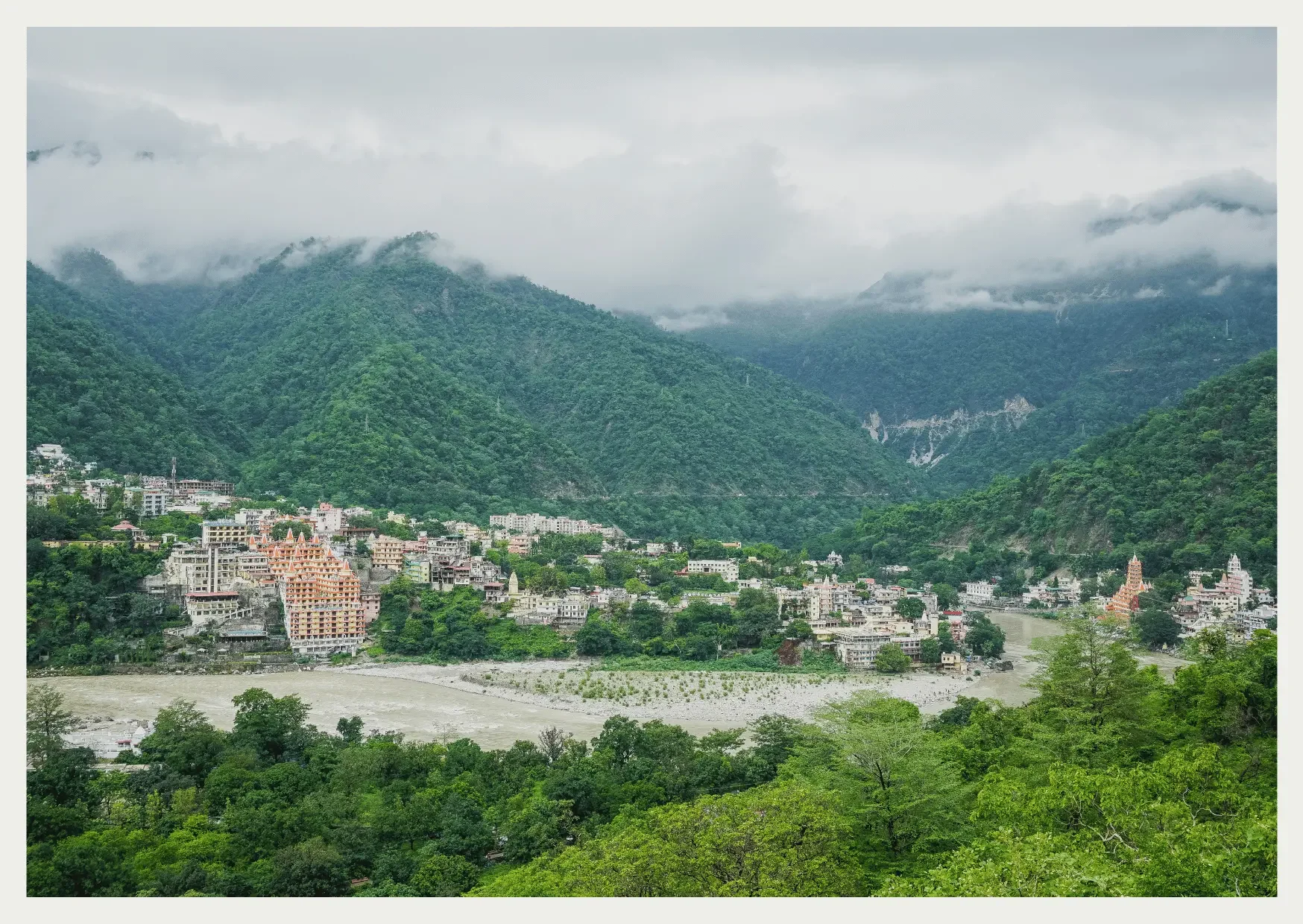
The lower Himalayas, mystical caves, pious Ganga, ancient ashrams, timeless culture of Yoga and Ayurveda - Rishikesh heals those who seek.
Ashrams: Where Discipline Becomes Devotion
Rishikesh has more ashrams per square kilometer than almost anywhere on earth, and they didn't spring up for the tourist trade. Parmarth Niketan, Sivananda Ashram, Swarg Ashram — these institutions have been running the same dawn schedules, the same disciplines, for generations, long before “wellness retreat” was a category anyone booked online.
What actually separates an ashram from a resort offering yoga classes isn't architecture. It was never the architecture. It's the rhythm. Wake before sunrise. Practice. Chant. Eat simply, together, in silence or near-silence. Rest. Repeat. That structure isn't incidental to the healing — it is the healing, in large part. A mind that's spent years running on scattered inputs and constant choice finds something almost physically relieving about a day with no decisions left to make. Our founder has written about what it actually meant to live inside one of these traditions in our blog article real yoga and the gurukul tradition. And it's a very different thing from a curated wellness week. It asks more of you. It also gives back more.
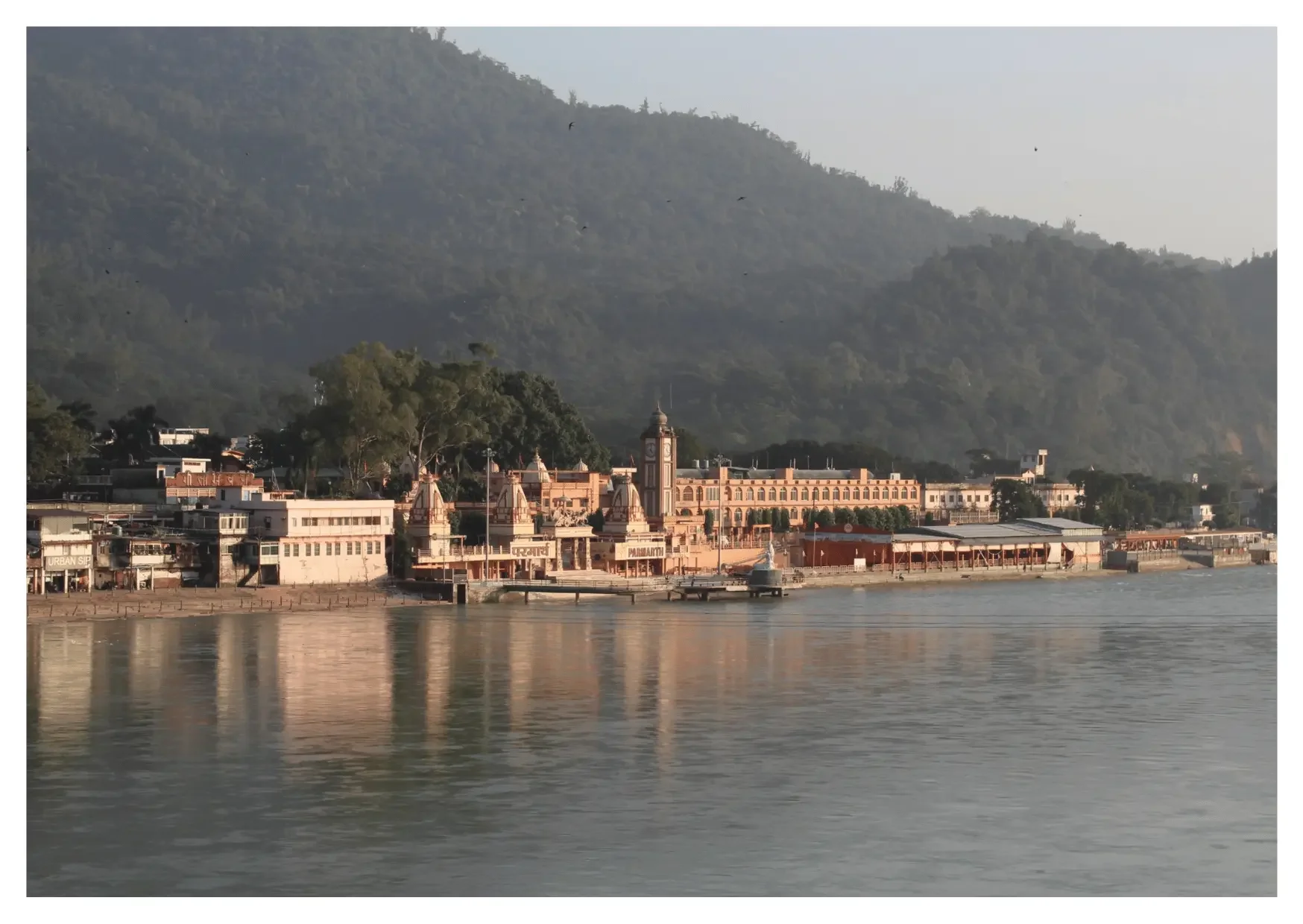
Rishikesh ashrams have been devoted to preservation and perpetuation of the Vedic lineage & culture since ages.
Ayurveda: The Original Wellness Science
Long before "holistic health" became a marketing category, this region was already treating the body as a system, not a set of isolated symptoms. Ayurveda — literally "the science of life" — developed alongside the same yogic and Vedantic traditions that shaped Rishikesh's ashrams, and the two have never really been separate practices here. One works on the body from the outside in; other works from the inside out.
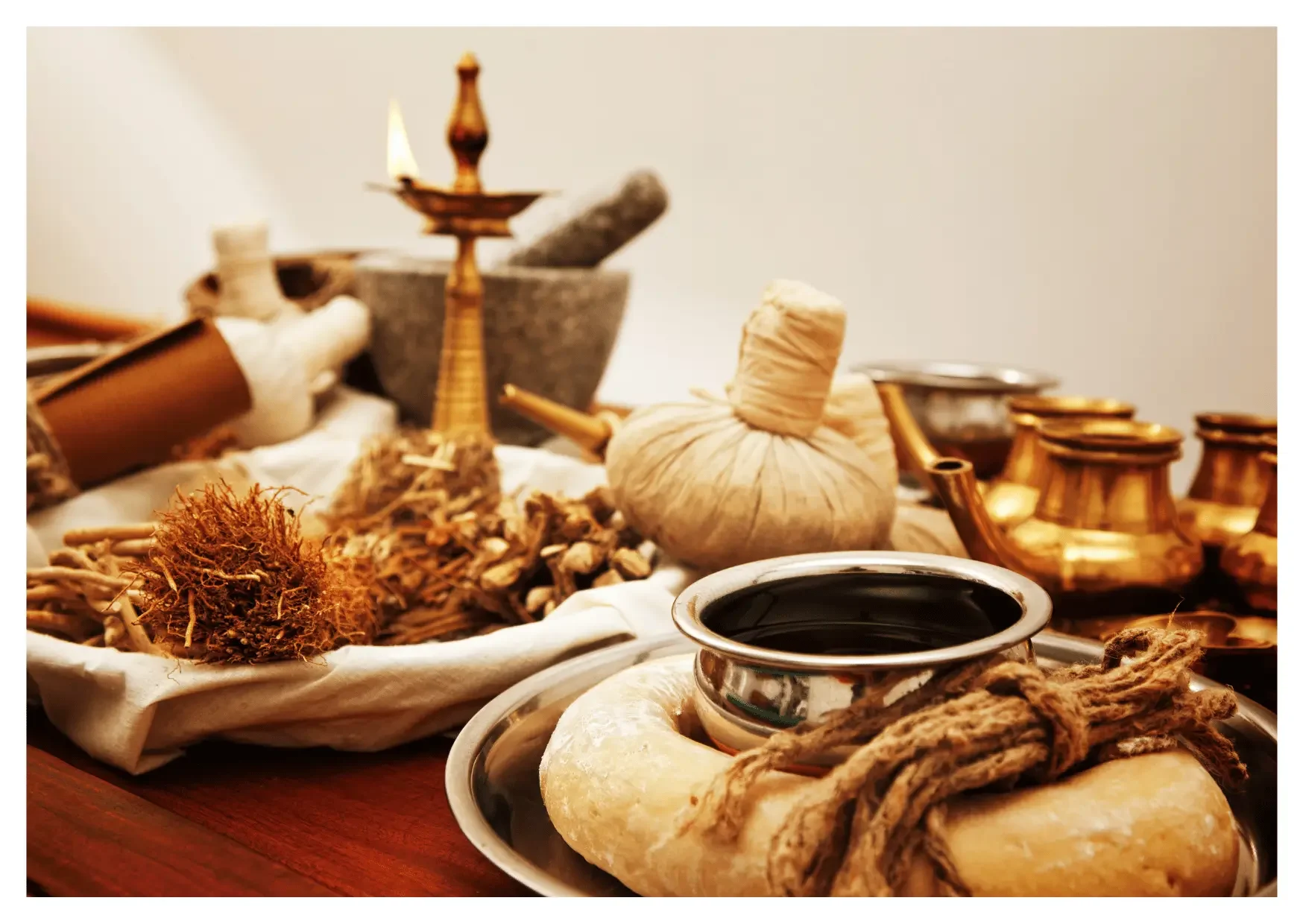
Ayurveda - the original holistic wellness science thrives in Rishikesh
Rishikesh's Ayurvedic practitioners still follow the same principles laid out in classical texts - your constitution, your dosha; your digestion, your agni. The daily and seasonal rhythms your body was actually built to follow, whether modern life respects that or not. A consultation here often looks less like a spa menu and more like genuine diagnosis. Pulse reading. Questions about your sleep, your digestion, your mood. Followed by a plan built around food, herbs, oil massage - abhyanga - and routine. Not a single treatment you walk out of and forget by dinner.
It's slower than a Western prescription. It's also aimed at the cause, not just the symptom. Which is exactly why people who've tried everything else often end up here last.
For deeper imbalances, practitioners may recommend Panchakarma. A five-step detoxification process (vamana, virechana, basti, nasya, raktamokshana). Closest thing Ayurveda has to a full reset. It's not a spa day. It typically runs one to three weeks. Involves specific oils and herbs matched to your constitution, not a generic protocol. And it asks for real dietary discipline on both ends (before and after). Not just during.
But it's also the treatment most people mean when they say Ayurveda actually changed something for them. Not just relaxed them for an afternoon and left everything else exactly as it was.
Emotional Healing: What the Mountains Hold Space For
Nobody arrives in Rishikesh purely for the scenery. Underneath almost every visit — teacher training, retreat, solo trip, half-formed idea about "figuring some things out" — there's usually something unresolved. Grief. Burnout. A relationship that ended badly. A version of yourself you've lost track of. Rishikesh doesn't fix any of that for you. What it does is remove almost everything that usually keeps a person from actually sitting with it.
There's a particular kind of relief in being somewhere where the ordinary excuses don't apply — no meetings to duck into, no notifications to hide behind, and a whole community of strangers around you who are also, quietly, doing their own version of the same work. Evening satsang, sitting by the Ganga at dusk, the shared silence of a group meditation — these aren't performances. They're structured for something that's very hard to do alone: staying with a feeling long enough to actually move through it instead of around it. Emotional healing here rarely looks dramatic. It's the same paralysis-to-clarity arc we wrote about through Krishna's counsel to a psychologically stuck warrior — advice that still reads like a manual for an anxious, notification-addicted mind. More often it looks like someone crying quietly during a chant, or laughing for the first time in weeks over breakfast at a communal table, and not quite being able to explain why.
Physical Healing: The Body Recalibrates Itself
Ask people what physically changed after a few weeks in Rishikesh and the answers are almost boringly consistent: they slept properly. Digestion settled. Chronic tension — the kind carried in a jaw or a lower back for years — eased without anyone specifically treating it. None of this is mystical. It's what happens when a nervous system that's been running on stress hormones for months finally gets consistent wake time, sattvic food, daily movement, clean air, and a genuine reduction in decision fatigue.
Add in the specific tools the town is built around — daily asana practice that rebuilds mobility and strength gradually rather than through a single dramatic workout, pranayama that measurably shifts the nervous system out of fight-or-flight, and a Panchakarma protocol addressing whatever's been quietly wrong for years — and the physical case for Rishikesh becomes as strong as the spiritual one. If breathwork specifically is what you're curious about, pranayama suite is usually where people start once they feel the shift beginning.
Why the Body and the Spirit Were Never Separate Here
This is really the aspect both halves of Rishikesh's story are pointing at. The river and the mountains explain why seekers have always come here. The caves, the ashrams, and Ayurveda explain how the place actually changes them once they arrive. Neither half works without the other — a beautiful setting with no method is just a postcard, and a rigorous method with no context is just a routine. Rishikesh has spent thousands of years refusing to separate the two.
The caves teach silence, the ashrams teach rhythm, Ayurveda teaches synergy — but none of that quite explains why people keep coming back years after the "healing" part is technically done. Part of the answer sits upstream of this piece, in why visit Rishikesh. Part of it is timing —best time to visit Rishikesh, since when you arrive changes what kind of healing is even on offer, a freezing January satsang doing something a monsoon week can't.
And for women arriving alone into all this, healing has a practical prerequisite too — Rishikesh feeling safe enough for solo woman to actually let your guard down.
But the part that's hardest to capture in a piece about caves and Panchakarma is what keeps pulling people back once the protocol is done — the friend made over shared kitchen duty, the chai stall owner who remembers your order. We explore exactly that in Why Rishikesh Stays With You.
If you're carrying something you've been meaning to put down — physically, emotionally, or both — our mantra sadhna yoga retreats are built around exactly this rhythm: the same dawn to dusk practices, the same food, the same quiet structure that's been doing this work for generations. It's still here - still waiting for whatever brought you to this page.
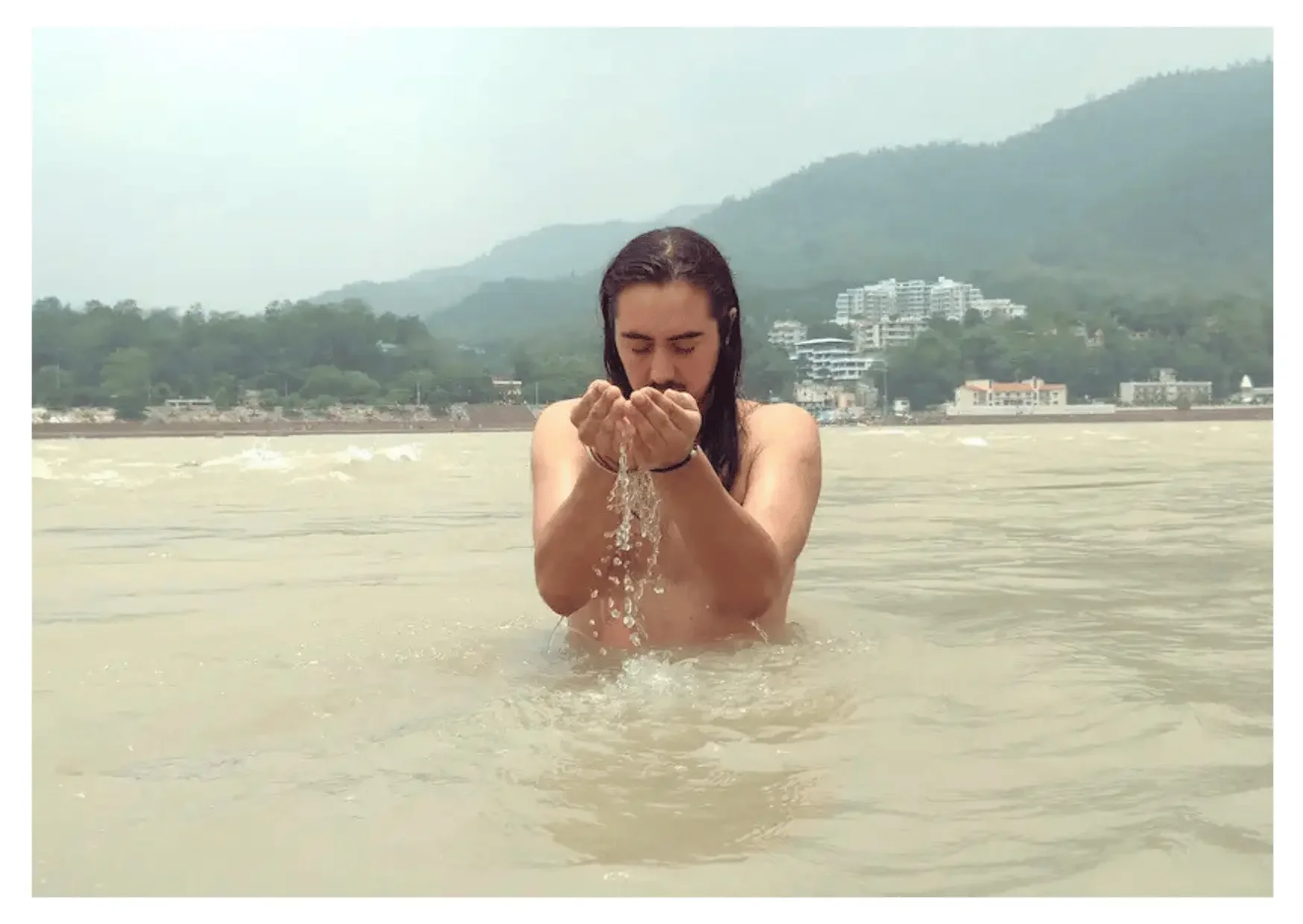
A student offers homage to Mother Ganga thankful for her embrace. Ganga welcomes all.
So what part of Rishikesh is pulling at you right now? The stillness of the caves. The discipline of ashram life. Or the physical reset Ayurveda offers. Tell us in the comments. We'd genuinely love to know what's calling you.